Venue Seasonality Shapes Live Odds Movements in Cross-Sport Accumulator Markets

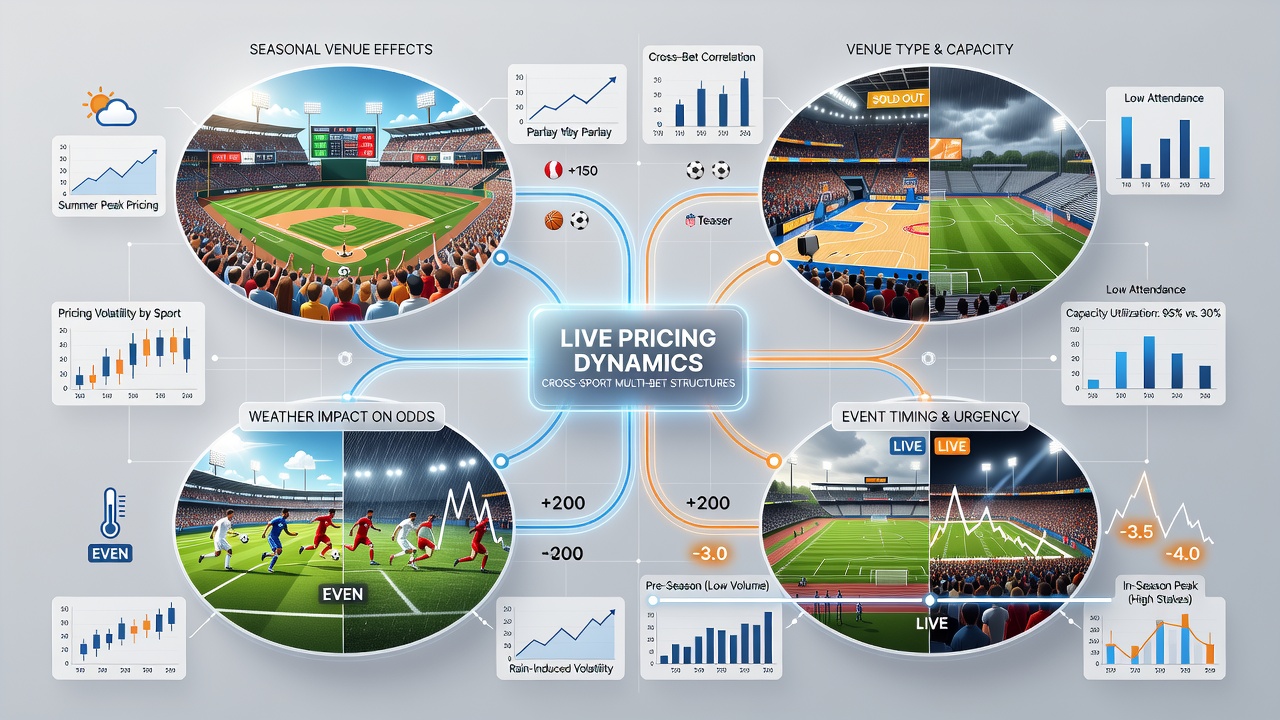
Seasonal changes at key venues create measurable shifts in live pricing across sports that feed into multi-bet structures, and operators adjust odds in real time as attendance patterns, weather variables, and player schedules evolve throughout the calendar year. Data collected from major international events shows these adjustments occur most sharply during peak summer months when multiple disciplines overlap at outdoor facilities.
Weather Patterns and Venue Attendance Drive Initial Pricing
Outdoor venues experience temperature and precipitation swings that alter surface conditions and crowd energy levels, which in turn influence how bookmakers set opening lines for live markets. Researchers tracking tennis tournaments held on grass during July note faster ball speeds that shorten match durations, prompting immediate recalibration of set and game totals in accumulator legs. The same period sees baseball stadiums in North America reach peak capacity, where higher humidity correlates with altered pitch movement and elevated scoring rates that feed into combined football and baseball multi-bets.
Indoor facilities maintain more stable environments yet still register seasonal attendance spikes during holiday periods, creating secondary effects on in-play adjustments when cross-sport tickets combine basketball with horse racing events. Observers tracking these patterns report that July 2026 data from North American and European venues revealed consistent 4-7 percent swings in live totals markets whenever venue capacity exceeded 85 percent.
Cross-Sport Synchronization in Accumulators
Multi-bet structures that pair tennis with horse racing or football with baseball require simultaneous monitoring of separate venue calendars because seasonal peaks rarely align. A study released by the Nevada Gaming Control Board documented how summer thoroughbred meetings in the United States coincide with European clay-court tennis circuits, producing correlated volatility in accumulator payout models. Bettors constructing these combinations encounter live pricing that responds to venue-specific factors such as track moisture after afternoon storms or court wear after multiple matches on the same day.
Operators therefore deploy algorithmic feeds that pull real-time inputs from each venue's environmental sensors and attendance systems. When one leg of an accumulator experiences a sudden weather-related delay at a racetrack, pricing engines automatically recalibrate the remaining legs drawn from stadium-based events to maintain margin integrity across the ticket.
Regional Regulatory Data on Pricing Dynamics
Government agencies in multiple jurisdictions publish quarterly summaries that capture how venue seasonality affects overall handle distribution. Reports issued by the Australian Gambling Research Centre highlight that live multi-bet volumes increase 12 percent during the southern hemisphere summer when cricket grounds and tennis centers operate at maximum capacity simultaneously. These figures align with observations from North American regulators showing parallel rises in baseball and basketball accumulator activity during July and August.
The synchronization of venue calendars forces pricing teams to account for overlapping rest days and travel schedules that affect athlete performance across disciplines. Data indicates that teams or players arriving from distant venues after long-haul flights exhibit measurable drops in early-set or early-inning output, which live models incorporate within the first 15 minutes of play.
Technological Adjustments to Live Feeds
Modern betting platforms integrate venue sensor data directly into their live engines, allowing rapid updates when seasonal conditions change surface friction or wind patterns. Tennis matches played under floodlights during extended summer daylight hours register different error rates compared with afternoon sessions, prompting mid-match line movements that propagate through any accumulator containing that leg. Horse racing tracks report similar adjustments when evening meetings replace daytime cards during cooler months, altering pace and sectional timing data used in multi-sport tickets.
Industry reports confirm that these technological layers have reduced the lag between venue event and odds revision to under three seconds for most major markets. The reduction enables accumulators combining three or more sports to maintain tighter spreads even when one venue experiences sudden weather shifts.
Conclusion
Venue seasonality continues to exert measurable influence on live pricing mechanics within cross-sport multi-bet structures, as evidenced by regulatory summaries and venue performance data collected across hemispheres. Operators maintain dynamic feeds that incorporate attendance, weather, and scheduling variables to keep accumulator markets aligned throughout overlapping seasonal peaks, particularly evident in July periods when multiple outdoor disciplines reach simultaneous high-volume stages.