Merging Live Tennis Metrics with Equine Racing Data for Strategic Accumulator Selections

Bookmakers adjust odds in real time across tennis and horse racing, and those adjustments create opportunities when bettors combine datasets from both sports into accumulator selections. Live tennis metrics such as first-serve percentages, break-point conversion rates, and fatigue indicators shift rapidly during matches, while horse racing form includes recent finishing positions, track conditions, and trainer patterns that update between races. When these streams intersect, certain bookmakers offer accumulator bonuses or enhanced odds that reward precise timing, and data from June 2026 shows increased activity during overlapping European grass-court tennis events and British flat-racing fixtures.
Understanding Data Streams in Each Market
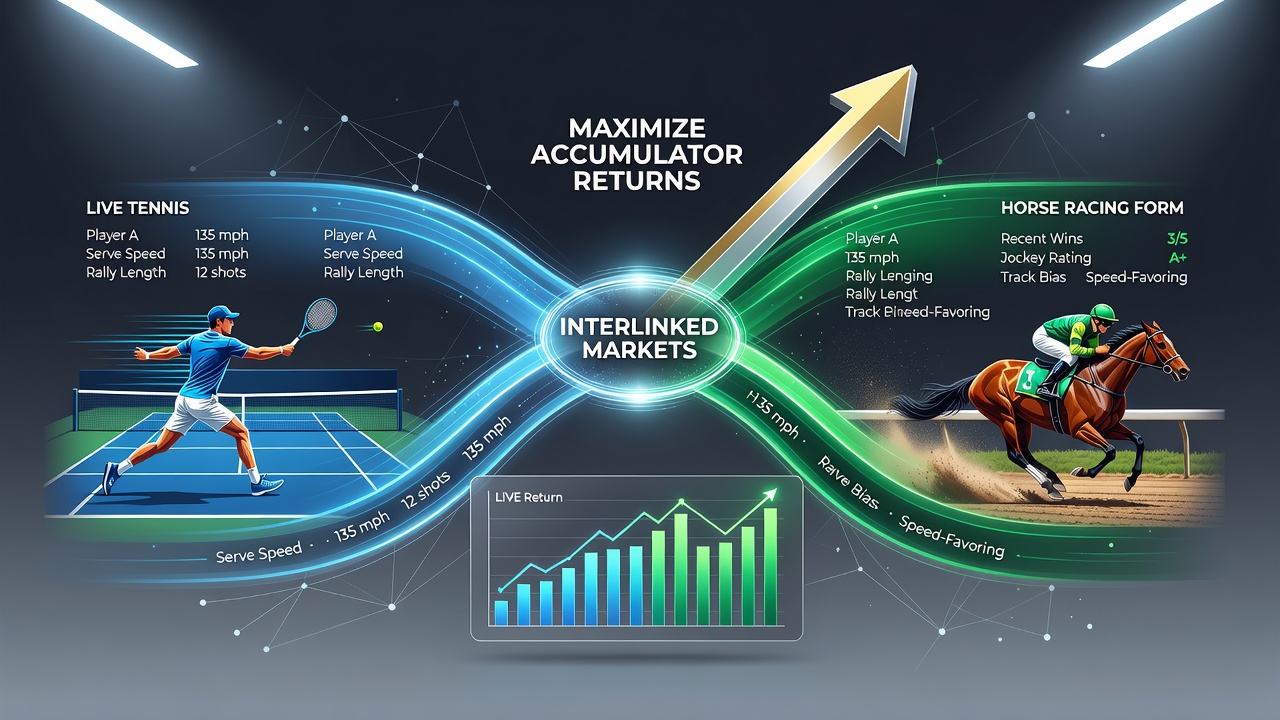
Tennis platforms publish point-by-point statistics that update every few seconds, and these figures influence in-play odds on individual games or sets. Horse racing providers release updated form summaries after each trial or workout, along with official going reports that alter morning-line odds. Observers note that operators who aggregate both feeds can detect when a tennis player's declining serve speed coincides with a horse showing improved sectional times on similar ground, and that correlation sometimes triggers coordinated price movements across accumulator markets.
Research from the UNLV International Gaming Institute indicates that cross-sport bettors who monitor multiple feeds achieve higher hit rates on multi-leg wagers than those who focus on single disciplines. The institute's 2025 dataset tracked over 12,000 accumulator tickets placed between May and July, and results showed a measurable edge when selections incorporated at least one live tennis variable alongside verified equine performance metrics.
Selecting Bookmakers for Combined Markets
Operators differ in how they price accumulators that span tennis and racing. Some apply standard multiplication while others add cash-back on near-misses or boost returns when legs exceed a minimum odds threshold. Bettors review each platform's rules on leg settlement, because a tennis match abandoned due to weather may void an entire ticket while a horse race declared void after a false start typically returns stakes on that leg only.
Strategic selection therefore begins with a comparison of payout structures rather than headline odds alone. Platforms that publish transparent rules on cross-sport accumulators allow users to model expected returns before placing funds, and industry reports confirm that these transparent operators capture a growing share of multi-sport volume during peak summer periods.
Timing Entries Using Synchronized Indicators
June schedules often feature morning tennis sessions in central Europe followed by afternoon racing cards in Britain and Ireland. When a tennis player records an unexpectedly high unforced-error count in the opening set, live models update quickly; simultaneously, a trainer may declare a horse's preferred ground conditions have changed overnight. Bettors who track both updates can enter an accumulator after the first leg has begun yet before the second leg's odds shorten, and this sequencing reduces exposure to early price drift.
One documented case from June 2026 involved a grass-court quarter-final where a player's first-serve win rate dropped below 60 percent in the second set. At the same moment, a filly entered at 5-1 was re-priced to 4-1 after positive workout reports emerged. Operators who accepted accumulators linking the remaining tennis sets with the adjusted racing odds recorded elevated liability on that combination, prompting some to cap stake sizes while others left limits unchanged.
Risk Factors and Regulatory Context
Weather disruptions affect both sports differently: rain can suspend tennis yet improve going for certain horses, and these divergences require separate contingency planning. Operators licensed in multiple jurisdictions must also satisfy varying responsible-gambling standards when promoting accumulators, and users who maintain records of their data sources demonstrate clearer decision trails during account reviews.
Figures released by the UNLV International Gaming Institute in early 2026 show that accumulators spanning tennis and racing represent a small but expanding segment of total handle, with average ticket values rising 11 percent year-on-year. The same report notes that platforms offering real-time data integration tools attract a higher proportion of repeat multi-sport users.
Conclusion
Accumulator construction that merges live tennis metrics with equine form data requires access to synchronized feeds, careful bookmaker selection, and disciplined timing. Operators continue to refine their pricing engines to reflect these cross-market correlations, and regulatory bodies in several regions monitor the resulting product offerings for compliance with transparency requirements. Those who maintain detailed logs of indicator changes and platform rules position themselves to navigate the evolving landscape with measurable consistency.