Court and Turf Interactions: Strategies for Accumulator Construction in Tennis and Horse Racing
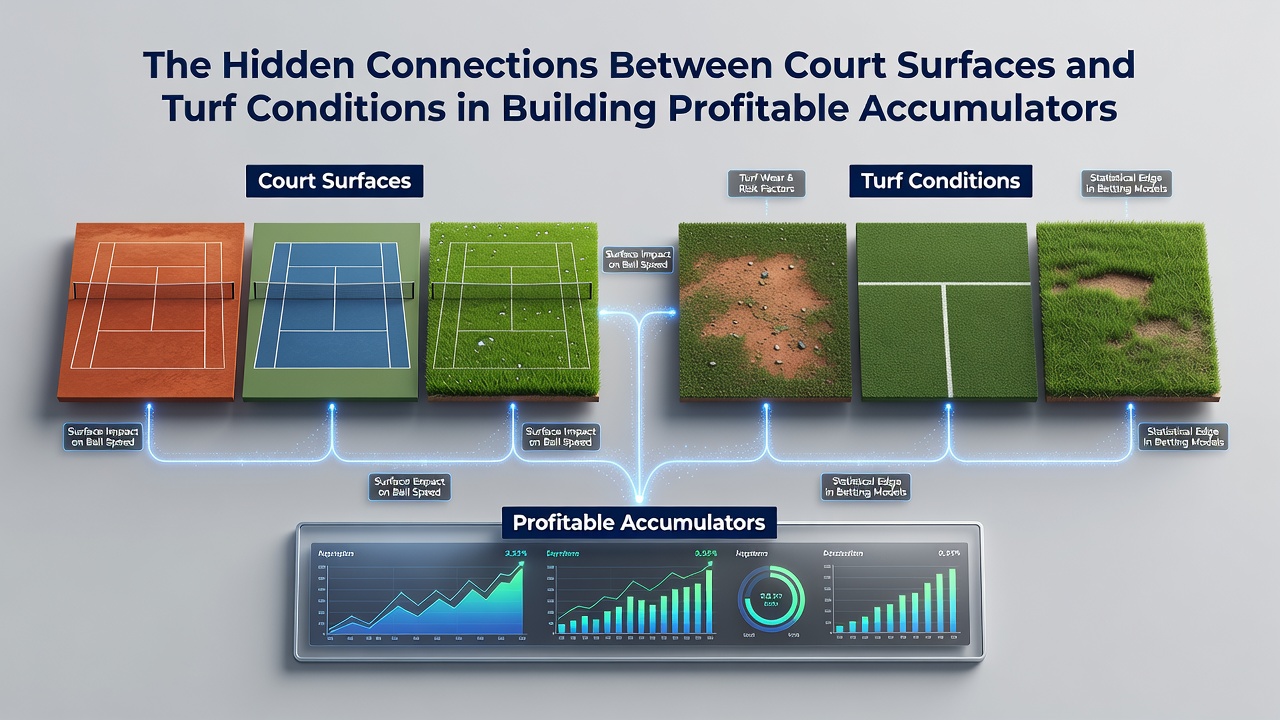
Observers note that tennis court surfaces and horse racing turf conditions share measurable variables that influence match and race outcomes, which in turn shape accumulator selections across both sports. Clay courts slow ball speeds and increase rally lengths while grass courts accelerate play and favor serve dominance, patterns that parallel how firm turf allows faster gallops whereas soft or heavy ground alters stride efficiency and stamina demands in equine events. Data from international sports governing bodies shows these surface characteristics remain consistent enough for statistical modeling yet variable enough across venues to create value opportunities when combined in multi-sport bets.
Tennis Court Surface Classifications and Performance Metrics
Hard courts deliver medium pace with predictable bounce according to International Tennis Federation reports while clay surfaces reduce bounce height and extend point duration by an average of 20 percent in professional matches. Grass courts produce the lowest bounce and highest serve effectiveness with aces rising notably at events like Wimbledon during July when weather patterns maintain drier conditions. Researchers tracking ATP and WTA data from 2024 through 2026 seasons found that surface transitions between tournaments create measurable shifts in player win rates with specialists on each type outperforming generalists by margins that accumulate across betting markets.
Horse Racing Turf Conditions and Their Recorded Effects
Turf states range from firm to heavy with official ratings published by racing authorities in multiple jurisdictions including the Australian Racing Board and North American tracks governed by The Jockey Club. Firm ground correlates with higher average speeds and lower winning times whereas heavy ground increases energy expenditure and favors horses with proven stamina records. Studies compiled by university equine research programs indicate that rainfall in the preceding 48 hours alters ground penetration resistance enough to shift expected margins by several lengths in distance races which directly impacts place and win probabilities used in accumulator legs.
Linking Surface Data Across Disciplines for Accumulator Construction
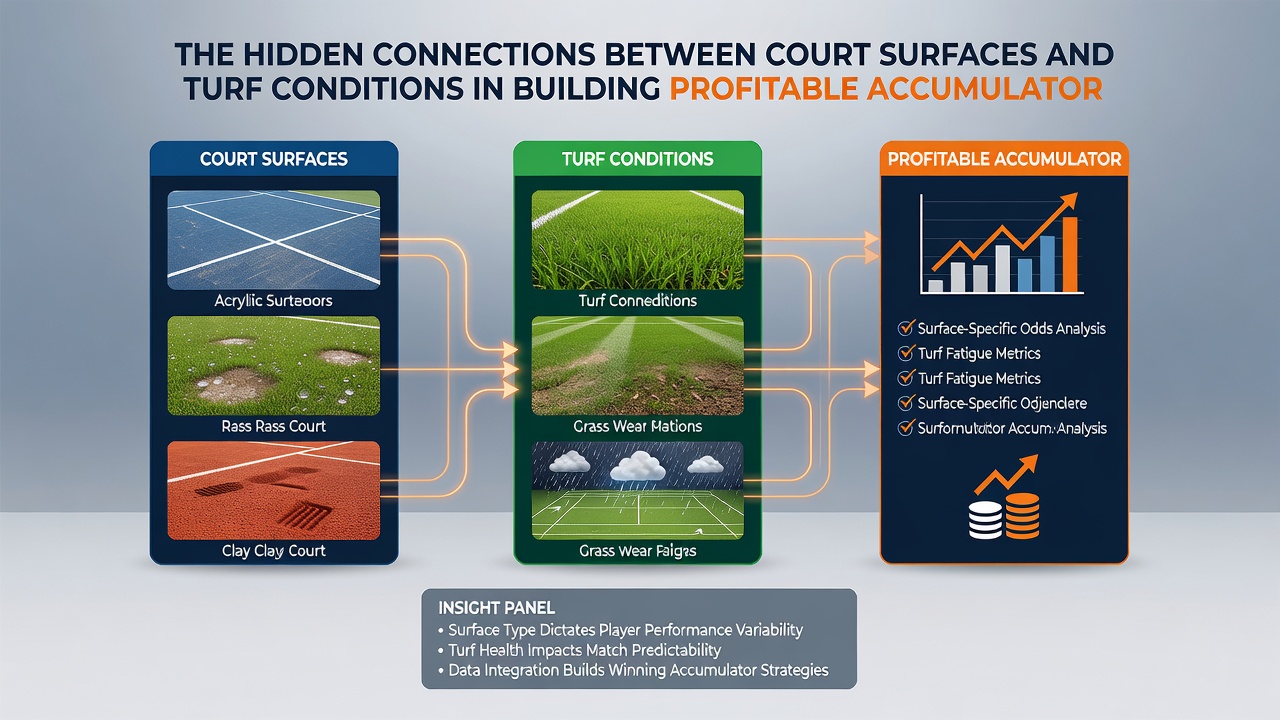
Accumulator builders combine tennis and racing selections by aligning surface preferences with current conditions rather than isolated form. A clay-court specialist in a European summer tournament might pair with a stamina horse on soft ground at an Australian winter meeting because both scenarios extend event duration and reduce volatility from speed-dominant outcomes. Figures released by European sports analytics firms reveal that such cross-surface pairings produce lower correlation coefficients than same-sport accumulators which statistically improves expected value when odds compilers price each leg independently. Those who monitor venue-specific data note that July schedules often feature simultaneous grass-court tennis events and mid-season flat racing meetings where turf moisture levels fluctuate with regional weather systems.
Practical Examples from Recent Seasons
One documented case from the 2025 season involved pairing a clay-court specialist reaching the quarterfinals at the French Open with a staying chaser entered on good-to-soft ground at a UK meeting, a combination that paid because extended rallies and longer race distances both materialized. Another instance tracked by Canadian betting research groups showed hard-court matches in North American summer hard-court swings aligning with firm-turf sprints where quick early speed translated across both sports. Observers tracking these patterns report that surface condition updates released 24 hours before events allow last-minute accumulator adjustments that capture value before odds adjust.
Data Sources and Measurement Standards
Performance databases maintained by organizations such as the International Tennis Federation provide standardized court pace ratings while the Jockey Club in the United States supplies daily turf condition reports that feed into predictive models. Academic papers from veterinary and sports science departments at institutions in Australia and North America quantify how surface friction coefficients affect both ball trajectory and equine stride length creating comparable datasets. These measurements enable accumulator constructors to weight legs according to surface compatibility rather than relying solely on recent form or head-to-head records.
Conclusion
Surface variables in tennis and horse racing supply quantifiable inputs that accumulator strategies incorporate through alignment of pace, bounce, and ground resistance characteristics. Data collected across multiple jurisdictions and governing bodies demonstrates consistent patterns that reward selections matching current conditions with athlete or equine profiles suited to those environments. July 2026 schedules continue to present overlapping grass-court tennis events and turf racing fixtures where these connections remain relevant for structured multi-sport betting approaches.